
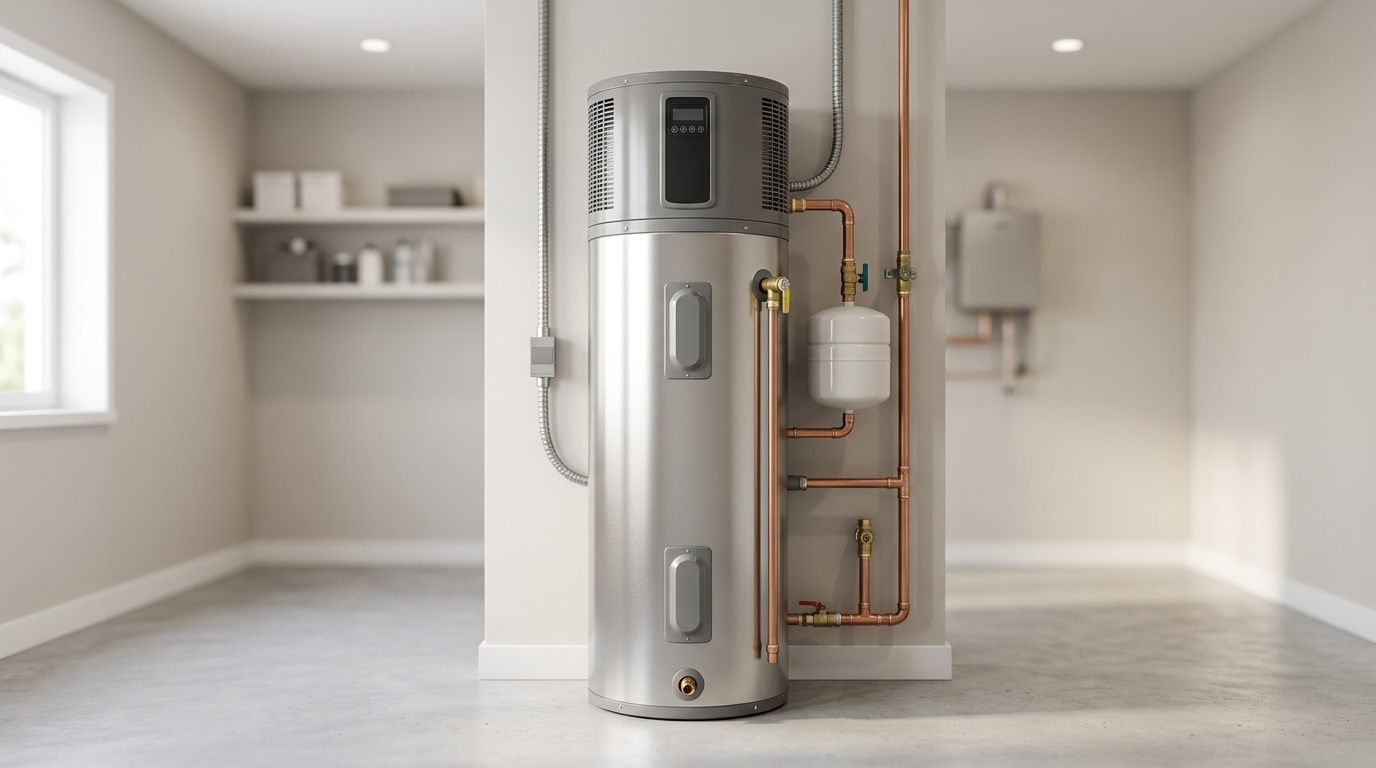
The Smarter Way to Heat Your Water
For most homeowners in the Greater Toronto Area, water heating is one of the biggest contributors to their monthly energy bills, often second only to heating and cooling the entire home. Traditional tank-style water heaters work hard, but they aren’t always the most efficient. Enter the heat pump water heater, also known as a hybrid water heater—a highly efficient technology that could significantly reduce your energy consumption and save you money.
But how does it work, and is it the right choice for your property? This guide will walk you through everything you need to know.
How Does a Heat Pump Water Heater Work?
Instead of generating heat directly like a conventional electric water heater, a heat pump water heater cleverly moves it. Think of it as a refrigerator working in reverse. It pulls warmth from the surrounding air and transfers that heat into the water stored in its tank. This process of heat transfer is far more energy-efficient than creating heat from scratch using electric resistance coils.
Because they rely on ambient air temperature, they also include standard electric heating elements as a backup. This “hybrid” capability ensures you have consistent hot water during periods of very high demand or in colder conditions, giving you the best of both worlds: incredible efficiency and reliable performance.
Key Benefits for GTA Homeowners
The primary advantage of upgrading to a heat pump water heater is the potential for substantial energy savings. Here’s what makes them so attractive:
- Exceptional Energy Efficiency: These units can be two to three times more efficient than their conventional electric counterparts. For a busy family in the GTA, this can translate into hundreds of dollars in savings on electricity bills each year.
- Environmental Impact: By using less electricity, you reduce your home’s carbon footprint, making it a greener, more sustainable choice for water heating.
- Dehumidification: As a byproduct of its operation, a heat pump water heater cools and dehumidifies the air around it. This can be a welcome bonus if the unit is installed in a damp basement during humid Toronto summers.
Installation and Siting Considerations
A successful installation is key to maximizing the benefits of a heat pump water heater. Unlike a standard tank that can be tucked into a small closet, these units have specific requirements:
- Space and Airflow: They need to be installed in a location with adequate air volume to draw heat from—typically a room that is at least 10 ft x 10 ft (or 100 square feet). An unfinished basement, utility room, or garage is often an ideal spot.
- Temperature: The unit operates most efficiently in spaces that remain between 4°C and 32°C year-round.
- Condensate Drain: Because they dehumidify the air, they produce condensate that must be routed to a nearby floor drain or managed with a condensate pump.
- Height: They are often taller than conventional water heaters, so vertical clearance is an important measurement to check before purchase.
Is This the Right Upgrade for You?
A heat pump water heater is an excellent investment for many, particularly if you are replacing an old electric water heater, have a suitable installation location, and prioritize long-term energy savings. While the upfront cost can be higher than a traditional model, the monthly savings on your utility bill often lead to a favorable return on investment over the unit’s lifespan.
Choosing and installing the right water heater requires expertise. For professional advice and a seamless installation of a new heat pump water heater in your GTA home, it’s important to consult with qualified technicians. The team at Rezair Experts can assess your home’s specific needs, recommend the best model, and ensure your system is installed correctly for optimal performance and efficiency. Contact us today to learn more about making the switch to a smarter way of heating your water.